Welcome to SICHANGO VISION TECHNOLOGY
20 Web Inspection System FAQ — Expert Answers | SICHANGO
Knowledge Base · FAQ
Web Inspection System FAQ
20 Expert Answers for Print Buyers
Everything you need to know before buying or integrating a web inspection system — defect types, ACS & PPS modes, ROI, pharma compliance, and how SICHANGO compares to AVT, BST & Erhardt+Leimer.
Jump to topic
Basics & Installation
1
What types of printing machines can a web inspection system be used on?
▼Web inspection systems are compatible with flexographic (flexo), rotogravure, offset, digital, and hybrid printing presses, as well as slitting, laminating, and converting lines.
SICHANGO systems have been installed on presses from BOBST, Gallus, Mark Andy, Windmöller & Hölscher, Nilpeter, OMET, UTECO, and Weigang. Both narrow web label presses (250–650 mm) and wide web flexible packaging lines (up to 3,500 mm) are fully supported.
2
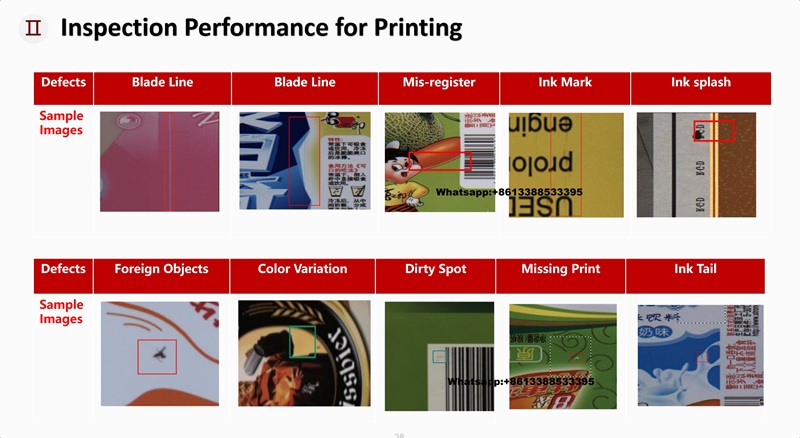
What print defects can a web inspection system detect?
▼A modern AI-powered web inspection system detects:
Color variation and ΔE color density deviation
Missing or faded text, numbers, and barcodes
QR code and GS1 DataMatrix errors
Streaks, scratches, and surface contamination
Pinholes and voids in ink coverage
Print registration errors and misalignment
Dot-missing, ink splatter, and halo effects
Edge defects and web wandering artifacts
Any structural deviation from the approved PDF master file
⚡ SICHANGO systems flag all of the above in real time at web speeds up to 600 m/min.
3
Can I install a SICHANGO system on an existing printing press?
▼Yes. All SICHANGO web inspection systems are available as retrofit installations for existing presses. The mounting hardware is adjustable and custom-engineered per machine brand and model.
Narrow web presses: Installation typically under 1 day
Wide web gravure lines: 1–2 days
SICHANGO provides installation drawings, remote commissioning, and on-site service for select regions. No major press modifications are required.
4
Are web inspection systems compatible with both narrow and wide web printing?
▼| Model | Web Width | Best For |
|---|---|---|
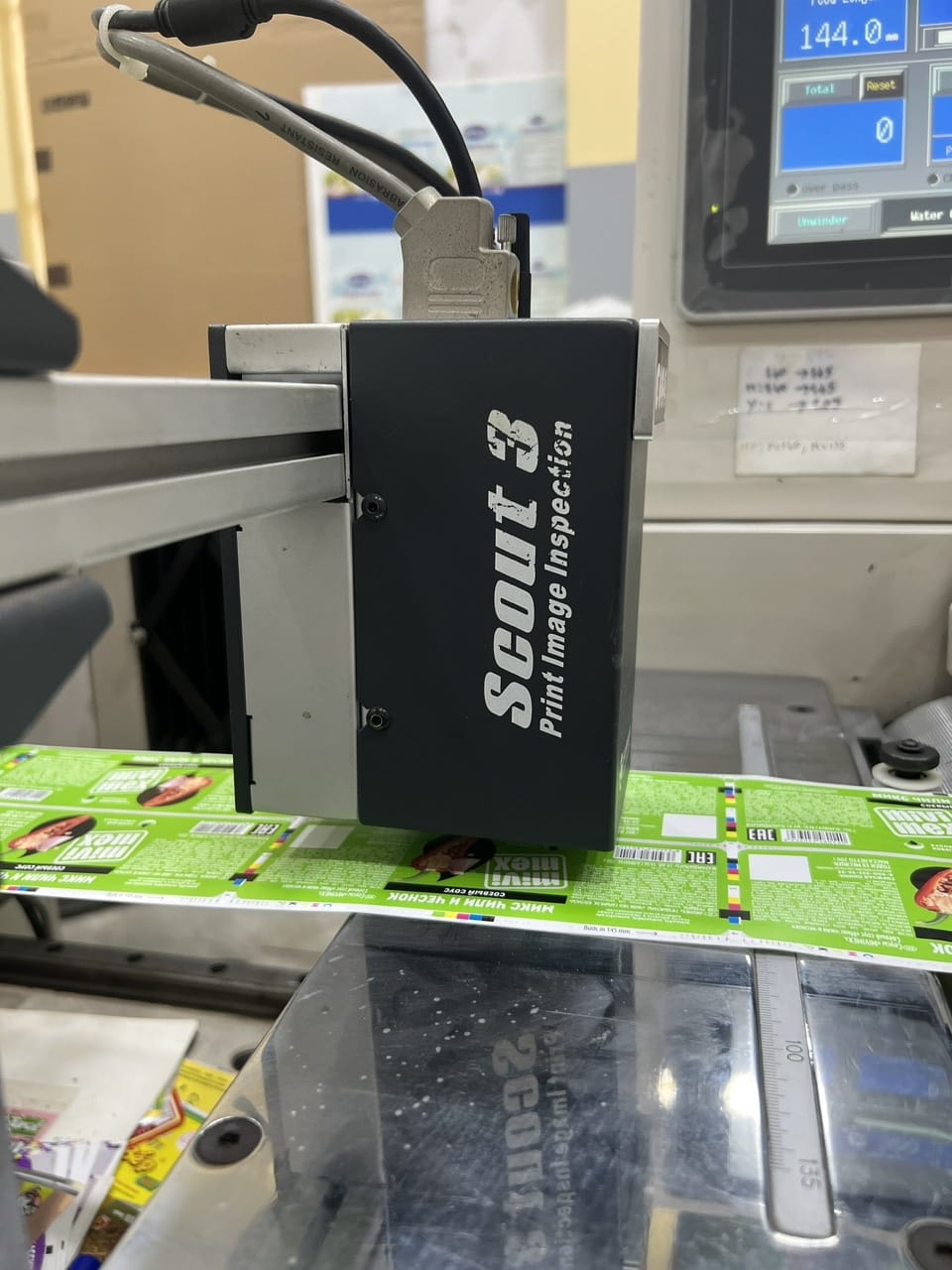
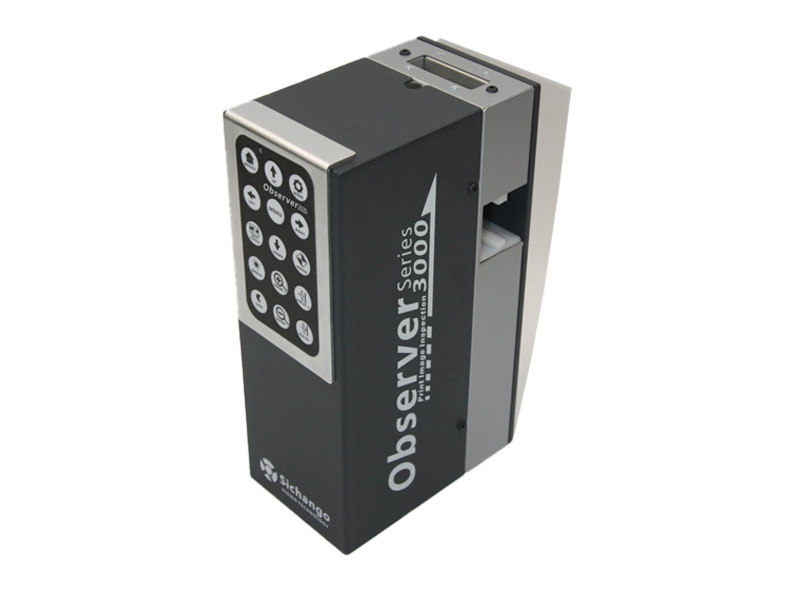
| Scout 3 / Observer 3000 | 250–450 mm | Narrow web label presses |
| Observer 4000R / Overseer 100 / 200 | Up to 3000 mm | Wide web with motorized traverse |
| OC 330 / OC 450 | 330 mm or 3000 mm (single frame) | Full-width flexible packaging, no scanning |
Features & Technical Specs
5
What is ACS mode in a web inspection system?
▼ACS (Auto Capture Scanning) automatically sweeps the inspection camera horizontally or vertically across the full print repeat to generate a complete panoramic image of the web — without any manual operator panning.
ACS follows a pre-defined scanning sequence and stitches captured images into a single high-resolution layout view. Especially useful during initial job setup, proofing, and high-precision tasks where full repeat visibility is critical before production speed increases.
6
What is PPS mode and how does it improve production efficiency?
▼PPS (Print Position Storage) saves all inspection parameters for each print job — camera positions, ROI zones, zoom levels, reference coordinates, and detection thresholds.
On repeat orders, the system reloads all parameters automatically with a single action.
⏱ Job changeover time reduced from 15–30 minutes → under 2 minutes. Zero manual re-calibration required. Especially valuable for high-mix, short-run label and packaging operations.
7
What is the maximum web speed a SICHANGO inspection system supports?
▼| Model Series | Max Web Speed | Coverage Mode |
|---|---|---|
| Observer 3000 / 4000R / 4000M | 600 m/min | Traverse + ACS scanning |
| Overseer 100 | 600 m/min | AI inline, motorized traverse |
| Overseer 200 | 600 m/min | Dual-axis AutoScan + dual camera option |
| OC 330 / OC 450 | 200 m/min | Full-width simultaneous — no scanning gaps |
8
Does SICHANGO offer dual-camera web inspection systems?
▼Yes. The Overseer 200 Dual System and Observer 4000R both support dual-camera synchronized inspection. The Overseer 200 Dual enables simultaneous front-and-back inspection of double-sided printed webs with real-time split-screen display.
Cameras operate in synchronized mode (same encoder pulse) or independently — widely used for double-sided label printing and flexible film packaging lines.
9
What is the difference between Observer Scout 3, 4000R, and 4000M?
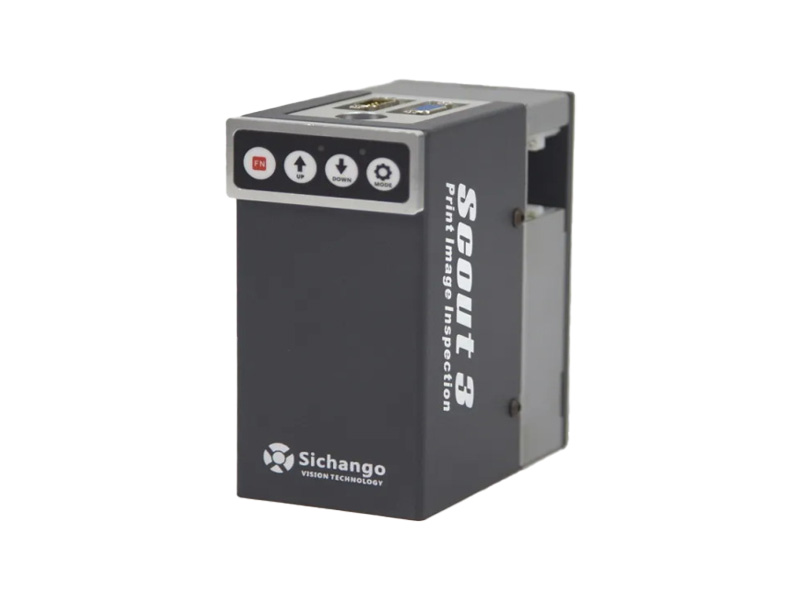
▼Scout 3: Narrow web rotary and combination presses. Manual camera movement via keyboard. Web widths up to 330 mm.
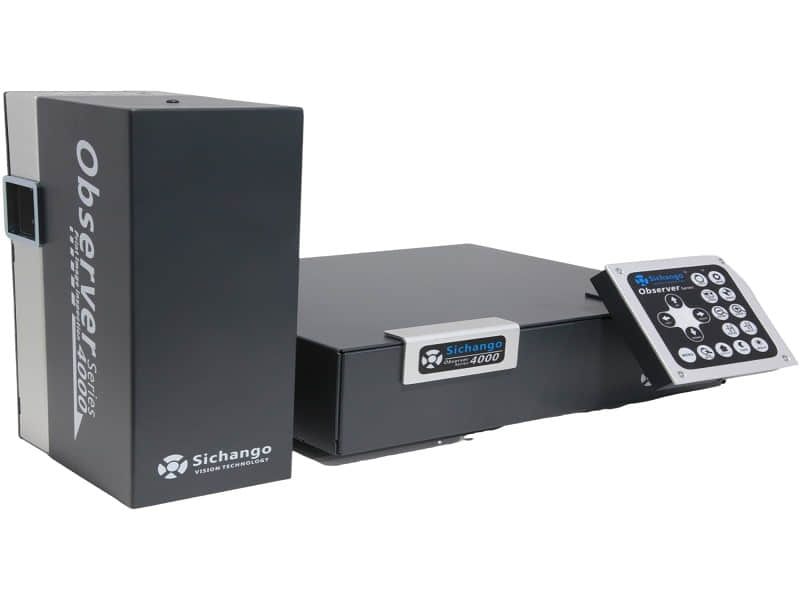
Observer 4000R: Wide web presses with manual traverse (keyboard + hand move). Higher resolution and wider field of view.
Observer 4000M: Wide web with motorized traverse + remote keyboard. Camera moves automatically to pre-set inspection zones — no manual intervention. Ideal for high-speed gravure and wide-format flexo lines.
10
What is the difference between a web inspection system and a 100% print inspection system?
▼A web inspection system (Observer / Overseer) uses one or two cameras with motorized traverse or ACS scanning to inspect across the full print repeat — covering the web sequentially.
A 100% print inspection system (OC 330/450 Series) uses a wide-format line-scan camera spanning the full web width in one frame — guaranteeing every millimeter is captured simultaneously with no scanning gaps.
✅ 100% inspection systems are preferred for regulated industries (pharma, food) or high-value substrates where any missed defect is unacceptable.
AI Technology & Industry 4.0
11
How does an AI web inspection system differ from a traditional camera viewer?
▼Traditional camera viewers (legacy Fife InPrint, BST Powerscope) display a video feed monitored manually by operators — covering only part of the web at any instant, requiring mechanical scanning, and lacking automated defect logic.
AI-powered systems like the SICHANGO Overseer 100 use deep learning models trained on thousands of real defect images to automatically compare every print against the approved PDF master, classifying deviations by type and severity in real time — generating alerts, defect counters, and annotated defect maps without operator intervention.
📈 AI-driven systems now demonstrate accuracy improvements of over 30% compared to traditional machine vision methods, while simultaneously reducing false rejection rates.
12
Can the system integrate with Industry 4.0 and smart factory platforms?
▼Yes. The SICHANGO Overseer 100 includes:
Live API connectivity to MIS, ERP, and QMS platforms
OPC-UA output for SCADA integration
Cloud-based quality reporting and OEE dashboards
Per-job defect analytics stored in a central database
ISO 9001 and GMP compliance reporting — no manual data export required
13
How does the system handle metallized film, transparent materials, and textured paper?
▼SICHANGO uses high-brightness adjustable LED illumination configured per substrate type:
Metallized film / foil: Polarized or angled lighting suppresses specular reflection
Transparent / clear substrates: Transmitted-light or diffuse-backlight configurations
Textured / matte paper: Raking-angle illumination highlights surface defects
The AI detection engine uses substrate-specific defect libraries to keep false rejection rates low. All settings are stored via PPS for repeat orders.
Buying Decision: ROI, Compliance & Comparisons
14
What ROI can I expect from a web inspection system?
▼Customers typically achieve full ROI within 6–18 months. Key value drivers:
Reduced material waste: Catching a defective roll at meter 50 vs. meter 5,000 saves thousands of meters of substrate and ink
Elimination of reprints and costly customer returns
Lower QC labor costs through automation
Prevention of product recalls — a single pharmaceutical mislabeling event can cost millions
📊 Most SICHANGO customers report 30–60% reduction in customer quality complaints within the first production quarter.
15
How does SICHANGO compare to AVT, BST, and Erhardt+Leimer?
▼| Criteria | SICHANGO | AVT / BST / E+L |
|---|---|---|
| AI Detection Accuracy | ✔ 99%+ (Overseer 100) | ✔ Comparable |
| Max Web Speed | ✔ 600 m/min | ✔ Comparable |
| Total Cost of Ownership | ✔ Lower — factory-direct | Higher — distributor markup |
| Installation Time | ✔ Under 1 day | 2–5 days typical |
| MIS / ERP API (standard) | ✔ Included | Often paid add-on |
| Hardware Customization | ✔ High flexibility | Fixed configurations |
| Global Brand Recognition | Growing — 30+ countries | ✔ Strong audit-trail value |
16
Is SICHANGO compatible with pharmaceutical GMP and FDA compliance requirements?
▼Yes. The SICHANGO Overseer 100 supports pharmaceutical packaging compliance with:
100% barcode and GS1 DataMatrix 2D code verification
Batch number OCR inspection
Audit trail logging and defect traceability reports
Compatibility with FDA 21 CFR Part 11 and EU GMP documentation requirements
DSCSA track-and-trace mandate support
Each inspection event is logged with timestamp, web position, defect image, and classification data — providing a complete electronic batch record.
Components, Support & Company
17
What component brands are used inside SICHANGO systems?
▼Panasonic & Datalogic: Optical and encoder components
Delta & Schneider Electric: Motion control and electrical systems
High-resolution CMOS sensors: Rated for up to 1,200 m/min
AI inference engine: Industrial PC architecture (Overseer series) or dedicated DSP controller (Observer series)
LED stroboscopic illumination: Synchronized to camera line rate at nanosecond level — eliminates motion blur
18
Does SICHANGO provide international after-sales service?
▼Remote diagnostics and screen-sharing (TeamViewer or equivalent)
Video training for operators and maintenance teams
Spare parts airfreight from Shenzhen
On-site service in select countries
Systems active in 30+ countries
🕐 Remote support response time: within 4 hours during business hours (UTC+8). Priority SLAs available for pharmaceutical and food packaging applications.
19
What training is required to operate a SICHANGO system?
▼SICHANGO systems use icon-based touchscreen navigation — most operators are productive within their first shift.
SICHANGO provides: multilingual operation manuals, video training modules, and remote commissioning with live operator guidance. For advanced features (AI model tuning, custom ROI setup, MIS integration), a 2–4 hour remote session is recommended for the system administrator.
20
Where is SICHANGO manufactured and how long has the company been operating?
▼SICHANGO (Shenzhen Sichango High Vision Technology Co., Ltd.) was founded in 2009 and is headquartered in Shenzhen, China. All systems are designed, engineered, and manufactured in-house using proprietary intellectual property.
With 15+ years of machine vision expertise, SICHANGO has installed systems in 30+ countries and holds multiple patents in AI visual inspection and digital strobe synchronization technology.
Still have questions? Talk to our engineers.
Tell us your press model, web width, and substrate type — we'll recommend the right system and provide a factory price within 24 hours.
 English
 Español
 Русский