Welcome to SICHANGO VISION TECHNOLOGY
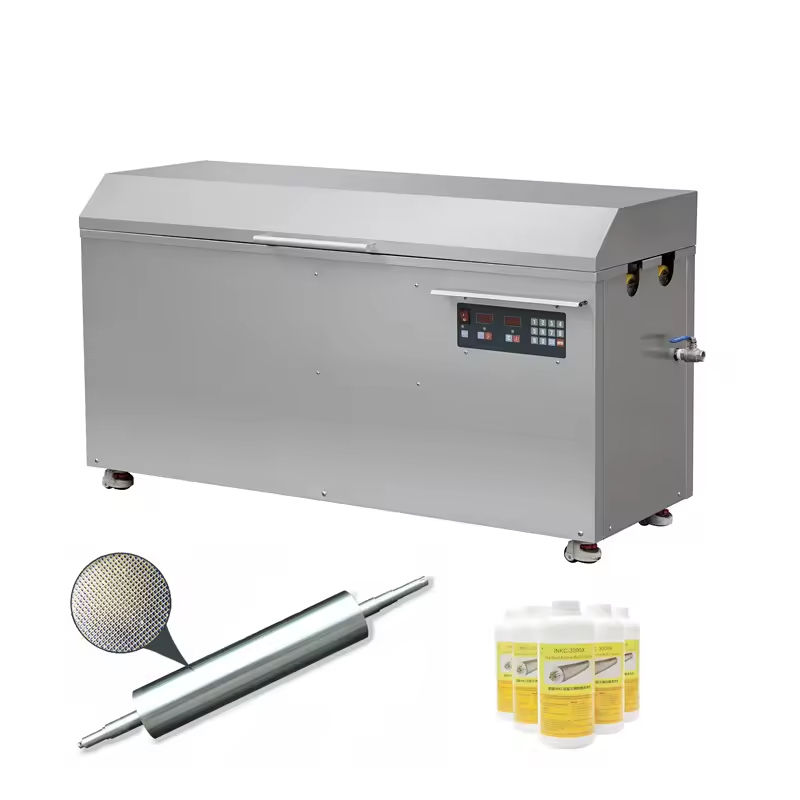
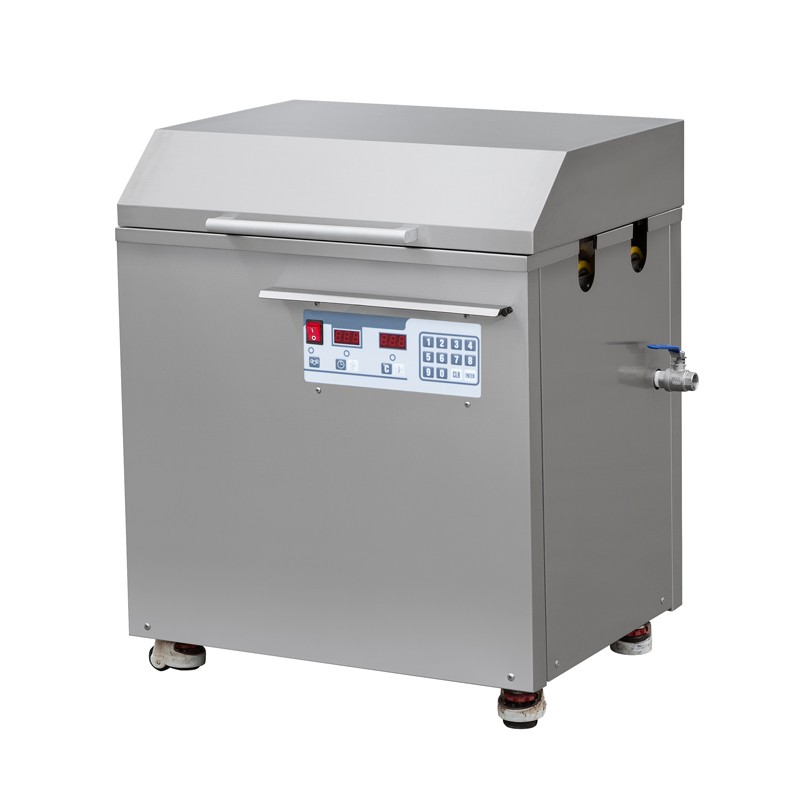
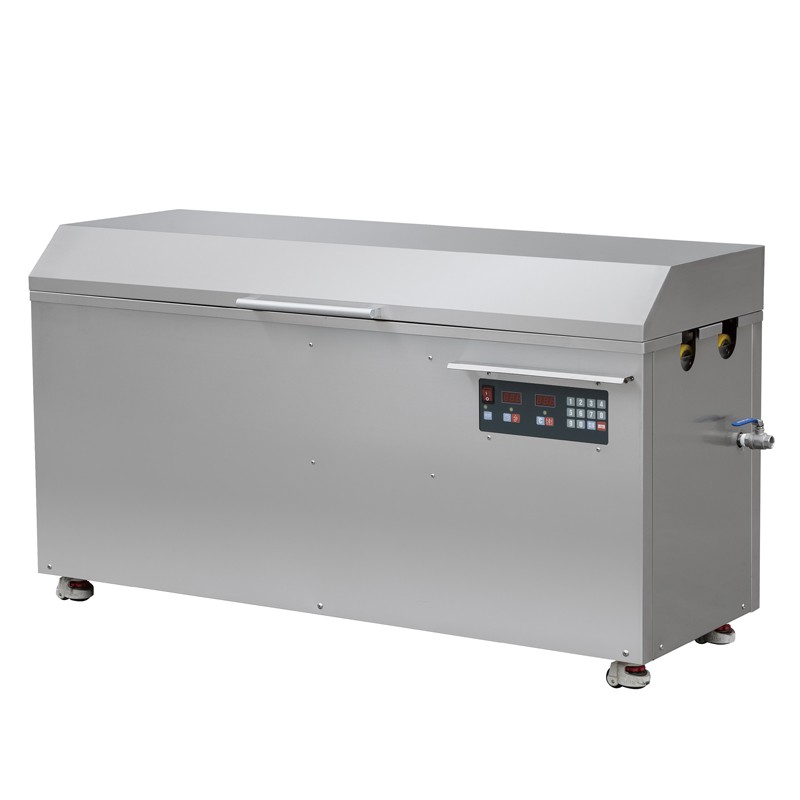
Anilox Roller Cleaning Machine | Ultrasonic Deep Clean | Restore 100% BCM
- Any length anilox roller can be suitable
Anilox Roller
Cleaning Machine
Restore 100% cell volume. Remove UV, water-based and solvent inks in 5–20 minutes — without chemicals, abrasion or cell damage. 9 standard models from 320 mm to 1,800 mm.

Built for Serious Flexo & Gravure Operations
Every design decision — from tank geometry to transducer frequency — is optimised for anilox cell cleaning, not generic industrial washing.
Deep Ultrasonic Cavitation
40 kHz transducers create cavitation bubbles that implode inside each cell, lifting dried ink from the deepest engravings without any abrasion.
5–20 Min Full Cycle
Ultrasonic soak, high-pressure rinse and air dry complete in under 25 minutes — your anilox roller returns to press the same shift.
Minimal Chemistry
Ultrasonic action does the work. Detergent usage is 80% lower than manual or spray methods — reducing cost and waste disposal requirements.
Consistent Ink Transfer
Fully restored BCM means repeatable ink film weight every run — eliminating density variation, colour shift and press approval waste.
Custom Roller Sizes
9 standard models from 320 to 1,800 mm. Non-standard lengths, diameters and journal configurations available on request.
Safe for All Anilox Types
Validated for ceramic laser-engraved and chrome-mechanically-engraved rollers. No effect on cell geometry or doctor blade land area.
4-Stage Cleaning Process
From dirty roller to press-ready in one automated cycle.
Load & Submerge
Roller placed in heated solution. Temperature 40–80 °C matched to ink chemistry.
Ultrasonic Soak
40 kHz transducers generate cavitation inside every cell simultaneously across the full roller length.
High-Pressure Rinse
Adjustable nozzles flush loosened residue from cells, land area and journal faces.
Air Dry & Done
Integrated air blow-off leaves the roller dry and ready for immediate reinstallation.
See It Clean a Heavily Plugged Anilox Roller
Full cleaning cycle from load to press-ready — with before/after cell condition.
Technical Parameters — All 9 Models
All models: 40 kHz · 20–100 °C · 220 V. Custom configurations available for non-standard dimensions.
| Model | Transducers | Ultrasonic Power (W) | Frequency (kHz) | Heating Power (W) | Max Roller Length (mm) | Temp Range (°C) | Power (V) |
|---|---|---|---|---|---|---|---|
| PQ-320 | 16 | 960 | 40 | 1,000 | ≤ 320 | 20–100 | 220 |
| PQ-450 | 18 | 1,080 | 40 | 1,000 | ≤ 450 | 20–100 | 220 |
| PQ-650 | 24 | 1,440 | 40 | 1,000 | ≤ 650 | 20–100 | 220 |
| PQ-850 | 27 | 1,620 | 40 | 2,000 | ≤ 850 | 20–100 | 220 |
| PQ-1000 | 33 | 1,980 | 40 | 2,000 | ≤ 1,000 | 20–100 | 220 |
| PQ-1200 | 39 | 2,340 | 40 | 2,000 | ≤ 1,200 | 20–100 | 220 |
| PQ-1300 | 42 | 2,520 | 40 | 2,000 | ≤ 1,300 | 20–100 | 220 |
| PQ-1500 | 48 | 2,880 | 40 | 3,000 | ≤ 1,500 | 20–100 | 220 |
| PQ-1800 | 60 | 3,600 | 40 | 3,000 | ≤ 1,800 | 20–100 | 220 |
Tank: 304 stainless steel. CE & ISO 9001:2015 certified. Non-standard roller lengths, diameters and 3-phase power available on request.
| General Specifications | |
|---|---|
| Tank Material | 304 Stainless Steel |
| Compatible Inks | Water-based, UV, Solvent, Gravure |
| Compatible Rollers | Ceramic & Chrome Anilox, Gravure Cylinders |
| Cleaning Cycle | 5–20 minutes |
| Certification | CE, ISO 9001:2015 |
| Warranty | 12 Months |

Find Your Model in 2 Steps
Select your longest roller and primary ink type — we'll recommend the right model and optimal cleaning settings.
Anilox Cleaning Methods Compared
Objective comparison of the four main technologies — choose based on production volume, ink types and budget.
| Criteria | Ultrasonic ✦ Our Machine | Laser | Soda Blast | Manual |
|---|---|---|---|---|
| BCM restoration | ✔ 100% | ✔ 100% | ◑ 70–90% | ✘ 30–60% |
| Cell wall damage risk | ✔ None | ✔ None | ◑ Low | ✘ High |
| Cleaning time per roller | ✔ 5–20 min | ◑ 15–30 min | ◑ 20–40 min | ✘ 30–90 min |
| All ink types (UV, Water, Solvent) | ✔ All types | ✔ All types | ◑ Water/solvent | ◑ Varies |
| Chemical usage | ✔ Minimal | ✔ Zero | ✔ Zero | ✘ Heavy |
| Equipment cost | ✔ Low–Medium | ✘ High | ◑ Medium | ✔ Very low |
| Suitable for >800 LPI cells | ✔ Yes | ✔ Yes | ✘ Not recommended | ✘ No |
| Operator skill required | ✔ Minimal | ◑ Moderate | ◑ Moderate | ✘ High |
✦ PrintQualityAI ultrasonic machines. ✔ Excellent ◑ Adequate ✘ Poor. Based on industry evaluation for standard ceramic anilox rollers.
How Fast Does the Machine Pay for Itself?
Adjust the inputs to match your operation and see a realistic payback estimate.
Your Operation
Estimated Annual Savings
Estimate only. Machine price assumed $8,000–$25,000 depending on model.
Is Your Anilox Roller the Root Cause?
Many press defects blamed on ink, plates or settings are caused by plugged anilox cells. Identify the real issue before the next job approval.
Recommended Cleaning Schedule
A structured four-tier programme protects your anilox investment and maintains print quality across all shifts.
Post-Press Quick Clean
- Wipe with approved pad while cells are still wet
- Apply solution before ink dries — critical for UV inks
- Remove from press if idle >30 minutes
Ultrasonic Deep Clean
- Full 15–20 min ultrasonic cycle for all rollers
- High-pressure rinse + air blow-off
- UV light inspection for residual plugging
- Log roller ID, date and condition
BCM Audit
- Measure BCM on all rollers (Capatch or microscope)
- Flag rollers below 85% original BCM
- Inspect ceramic for scoring or wear zones
- Update inventory condition log
Full Inventory Review
- Professional BCM measurement across fleet
- Identify rollers for resurfacing vs. replacement
- Service transducers and heating elements
- Staff refresher on cleaning procedures
UV ink operations: deep-clean every 2–3 days. Water-based corrugated: bi-weekly. The cost of cleaning is always less than a rejected job.
Cell Geometry & Cleaning Parameters
Cell geometry determines which cleaning settings deliver the best results. Our machines are configurable to match any anilox specification.
60° Hexagonal
Industry standard. Laser-engraved. Thinner walls, larger opening, 3-point post. Optimal for 40 kHz ultrasonic. 200–1,400 LPI.
45° Diamond
Mechanically-engraved. Deeper walls and 4-point post trap ink at corners. Needs 15–20 min at 65–70 °C for dried solvent inks.
Channel / Elongated
High-volume for viscous fluids. Larger aperture-to-depth ratio — easier to clean but requires correct nozzle pressure.
Tri-Helical / Ladder
High-speed UV coating transfer. Good ink release. Standard 40 kHz at 10–15 min sufficient for routine maintenance.
LPI vs. Recommended Cleaning Frequency
| Application | LPI | BCM | Frequency |
|---|---|---|---|
| Flood / Solid Coat | 165–300 | 5.0–12.0 | Weekly |
| Combination Print | 360–550 | 2.0–4.0 | Every 2–3 days |
| Process Colour | 700–1,000 | 1.3–3.0 | Daily |
| Fine Process / Hi-Fi | 1,000–1,400 | 1.0–1.8 | After every run |
Optimal Cleaning Parameters by Ink Type
| Ink Type | Temp (°C) | Time | Chemistry |
|---|---|---|---|
| Water-Based | 40–50 | 10–15 min | Alkaline pH 9–10 |
| UV-Curable | 60–70 | 15–20 min | UV-specific alkaline |
| Solvent-Based | 50–60 | 10–15 min | Solvent-compatible |
| Dried / Old Ink | 70–80 | 20–30 min | Heavy-duty alkaline |
Packaging, Delivery & After-Sales
From factory to press room — every step managed to protect your investment and minimise time-to-operation.
Export-Grade Packaging
Wooden crate, foam-lined with corrosion-inhibitor lining. Full protection for sea freight (LCL/FCL) and air cargo.
Worldwide Shipping
FOB, CIF and DAP terms. Export docs included: CI, packing list, CO, CE declaration. Lead time: 20–30 working days.
Installation Support
Detailed manual + video guide included. Remote commissioning via video call. On-site engineers available for large systems.
Operator Training
Video modules, laminated quick-reference card and live online session with your team after commissioning.
12-Month Warranty
Full parts and labour for 12 months. Defective components dispatched within 3 business days. Extended plans available.
Spare Parts Stock
Transducers, heating elements, nozzles and control boards stocked for all models. DHL/FedEx dispatch within 24 hours.
Frequently Asked Questions
Everything buyers ask before purchasing an anilox roller cleaning machine.
What is an anilox roller cleaning machine?
How does ultrasonic cleaning compare to laser cleaning?
Which ink types can it clean?
Will ultrasonic cleaning damage my anilox cells?
How long does a complete cleaning cycle take?
Can I get a custom machine for non-standard roller dimensions?
What certifications does the machine hold?
Ready to Restore Your Anilox Rollers?
Send us your roller dimensions — we'll recommend the right model, confirm pricing and lead time within 24 hours.